
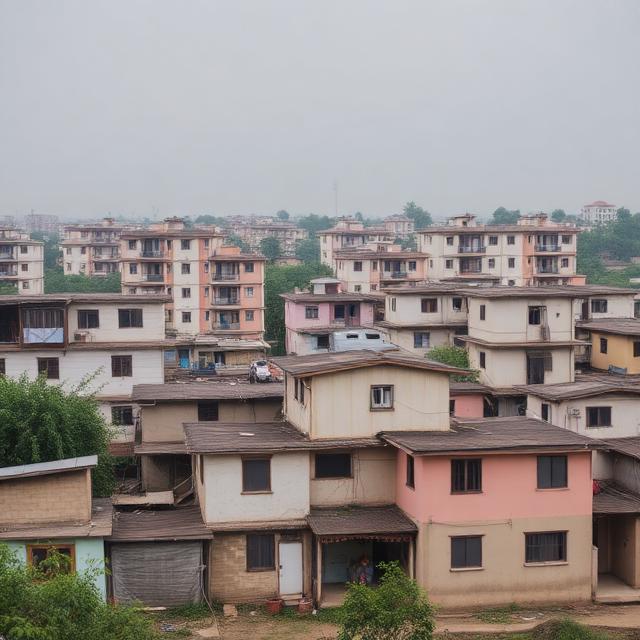
For decades, urban growth was measured by the expansion of luxury high-rises. However, the true resilience of a city isn’t found in its penthouses, but in its ability to house the workforce that keeps it running—the teachers, delivery partners, and healthcare workers. Today, Affordable Housing is moving from a welfare obligation to a strategic pillar of urban economic stability.
The Transit-Housing Link
A city is only as inclusive as its commute. The rise of Transit-Oriented Development (TOD) in India ensures that affordable housing is built along metro corridors.
- The Logic: When a worker spends more than 30% of their income on housing or more than 60 minutes commuting, the city loses productivity.
- The Strategy: Cities like Ahmedabad and Delhi are incentivizing developers to build compact, affordable units near transit hubs to reduce “transport poverty,” as outlined in the National TOD Policy.
Green Housing for the Masses
Affordability is no longer just about the purchase price; it’s about the cost of living.
- Passive Cooling: Using Light House Projects (LHPs) under the GHTC-India initiative, cities like Rajkot and Indore are building homes that use sustainable materials to reduce electricity bills by 20–30%.
- Resource Efficiency: Modern affordable housing projects are now integrating decentralized sewage treatment and rainwater harvesting to lower monthly maintenance costs for residents.
Financial Inclusion and the Rental Revolution
Owning a home isn’t the only path to stability. The Model Tenancy Act and the Affordable Rental Housing Complexes (ARHCs) scheme are creating a formal rental market.
- Impact: This allows migrant workers to live in dignified, safe environments close to their workplace without the massive upfront cost of a home loan, boosting the “circular economy” of urban labor.
Frequently Asked Questions (FAQs)
- What defines “Affordable Housing” in India? Generally, it refers to housing units with a carpet area of up to 60 sq. mtr. in metros and 90 sq. mtr. in non-metros, targeted at EWS and LIG categories (PMAY-U).
- What is PMAY-U? The Pradhan Mantri Awas Yojana (Urban) is a flagship mission to provide “Housing for All” in urban areas.
- How does housing affect climate resilience? Homes built with thermal insulation and proper ventilation reduce the energy demand for cooling, protecting residents from extreme heat (GHTC-India).
- What are Light House Projects (LHPs)? They are model housing projects built using innovative global technologies that are sustainable, disaster-resilient, and quick to construct.
- How can technology lower housing costs? Prefabricated and 3D-printing technologies reduce construction waste and time, which are major drivers of housing prices.
- Why is location more important than price? If an affordable house is far from job centers, the cost of transport cancels out the savings on rent (National TOD Policy).
- What is the Model Tenancy Act? A legal framework designed to balance the rights of landlords and tenants to encourage a robust rental market.
- Can affordable housing be “Green”? Yes. Certification bodies like IGBC provide ratings specifically for affordable housing to ensure energy and water efficiency.
- How do “Green Bonds” help housing? Funds raised through green bonds can be used to finance eco-friendly affordable housing, lowering the interest rate for developers.
- What is Transit-Oriented Development? A planning strategy that creates high-density, mixed-use areas (housing + shops + offices) within walking distance of public transport (MoHUA).