
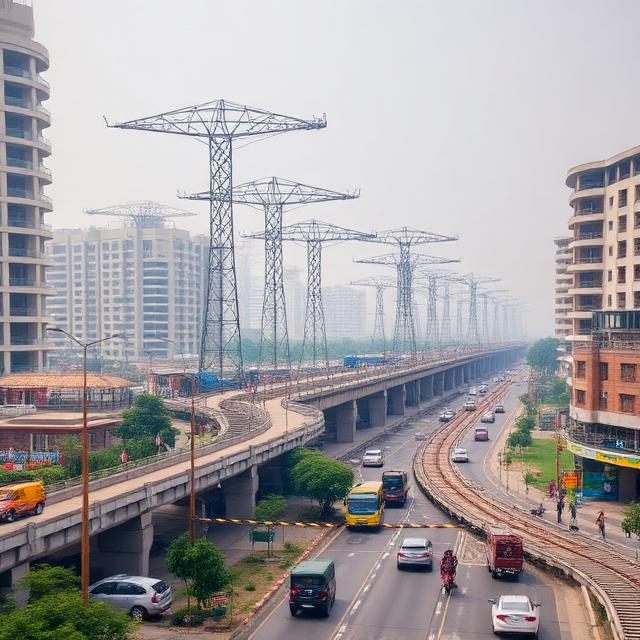
In the boardroom-heavy discussions surrounding India’s record-breaking ₹12.2 lakh crore infrastructure budget for 2026, it’s easy to get lost in the “Macro” (the GDP multipliers, the $7 trillion goal, and the sovereign credit ratings).
But infrastructure isn’t built for spreadsheets—it’s built for people. As the dust settles on the 2026 Union Budget, a ground-level reality check reveals a fascinating (and sometimes uneven) distribution of winners.
1. The Rural Revolutionary: The Small-Scale Farmer
While the “Bullet Train” grabs headlines, the real quiet revolution is happening via PMGSY-IV (Pradhan Mantri Gram Sadak Yojana).
-
The Benefit: As of early 2026, 99.7% of eligible rural habitations are connected. For a farmer in rural Odisha or Bihar, this isn’t about “logistics efficiency”—it’s about their perishables reaching a cold-chain hub before they rot.
-
The Digital Boost: The newly launched Bharat-VISTAAR, a multilingual AI tool, uses the high-speed rural 5G network to provide real-time crop advisory. For the first time, the “Digital Highway” is helping the “Kachha Road” farmer.
2. The MSME “Champion”: The Tier-2 Entrepreneur
For years, Small and Medium Enterprises (SMEs) were the biggest victims of India’s high logistics costs. By 2026, that script is flipping.
-
The Hub Effect: The development of City Economic Regions in Tier-2 and Tier-3 cities (like Indore, Surat, and Lucknow) has brought the marketplace to the factory gate.
-
Lower Friction: Logistics costs have finally dipped to 7.97% of GDP. For a small-scale textile manufacturer in Coimbatore, this translates directly into a 10-15% increase in profit margins, as they can now ship to global markets via the East Coast Economic Corridor at a fraction of the previous cost.
3. The New Urban Professional: Commuting Reimagined
In the mega-cities, the beneficiary is the “End-User” rather than the speculative investor.
-
Real Estate Transformation: In cities like Bengaluru and Mumbai, homes within one kilometer of a new Metro station now command a 15–25% premium.
-
Time as Currency: New links like Mumbai’s Goregaon-Mulund Link Road have slashed travel times from 90 minutes to under 30. For the dual-income family, this isn’t just “infrastructure”—it’s an extra hour of sleep or time with their children.
The Beneficiary Scorecard: 2026 Reality Check
| Group | Primary Benefit | The “Glow Up” Factor |
| Construction Workers | Job Stability | 12.6 lakh new jobs created via PLI & Infra projects as of late 2025. |
| Data Center Firms | Tax Holidays | Tax holidays until 2047 for foreign firms using Indian data centers. |
| MSMEs | Liquidity | Mandatory TReDS (bill discounting) for all govt transactions. |
| Middle-Class Homebuyers | Predictability | Buying “working infrastructure” rather than “promises.” |
4. The Unresolved Question: The “Displaced” and the “Disconnected”
A ground-level reality check isn’t complete without looking at those still waiting at the station.
-
The Skilling Gap: While the ISM 2.0 (Semiconductor Mission) and Biopharma SHAKTI create high-tech jobs, there is a mounting pressure on the unorganized sector (31 crore workers on the e-Shram portal) to upskill.
-
The Urban Poor: Massive infrastructure projects often lead to “gentrification.” As property values soar near transit corridors, low-income residents are often pushed further to the periphery, where “last-mile” connectivity remains a myth.
Conclusion
The “Who Benefits?” question has a clearer answer in 2026 than it did in 2016. The benefits have moved from the EPC contractors to the economic participants. However, the ultimate success of India’s infra boom will be measured by whether it can bridge the “Longevity Dividend”—ensuring that this massive physical growth translates into better health, education, and social mobility for the bottom 40% of the pyramid.