
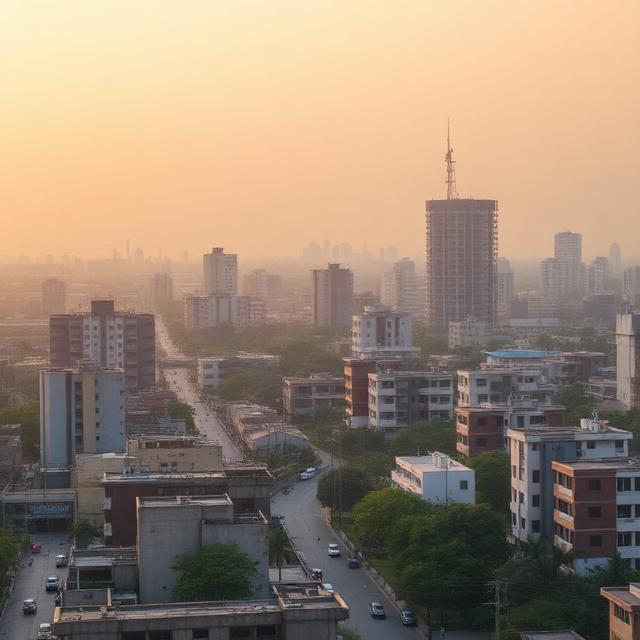
The global conversation around urban growth has undergone a quiet but profound transformation. In India, the Union Budget 2026-27—with its massive ₹12.2 lakh crore infrastructure outlay—marks a decisive pivot. We are moving away from the “Smart City” era of digital dashboards and into the era of Human-Centric Urbanism.
For too long, urban success was measured in the cold language of concrete and steel: the length of a new flyover, the depth of an undersea tunnel, or the height of a luxury skyscraper. But as Indian cities face the combined pressures of a $2.4 trillion infrastructure gap and worsening climate volatility, we are realizing that a city is not a machine to be optimized; it is a living ecosystem designed to support the human spirit.
The Shift: From Efficiency to Experience
The traditional model of urban development was built on “linear efficiency”—moving people from point A to point B as fast as possible. In 2026, the operative lens is Lived Experience.
The Mind-Nature Continuum: Modern urban design in cities like Delhi and Mumbai is increasingly adopting the “Mind the GAPS” framework. This shifts the focus toward Green spaces, Active places, and Pro-social zones. It acknowledges that air pollution and traffic aren’t just logistical hurdles; they are primary drivers of an urban mental health crisis that affects 1 in 3 residents in major metros.
The “Strange Attractor” of Dignity: In the language of System Strengthening, a human-centric city uses Dharma (Purpose) as its “Strange Attractor.” Infrastructure is no longer just “built”; it is “placed” to serve a purpose—like the Kochi Water Metro, which uses 2026-grade electric boat technology not just for speed, but to reconnect island communities that were previously isolated from the economic heart of the city.
Beyond the Tech: The “Cognitive City”
While the Smart Cities Mission (which concluded in 2025) gave us the “digital skeleton,” the new City Economic Regions (CERs) are giving cities a “heart.”
People-Centered Smart Cities: The transition in 2026 is toward Cognitive Infrastructure. These are systems that don’t just “report” data but “learn” from human behavior. For instance, AI-driven traffic management is being repurposed to prioritize pedestrian safety over vehicle throughput, recognizing that a city street is a social asset, not just a transit corridor.
Responsible Technology: We are seeing “Inclusive Innovation” where Digital Twins are used to simulate not just flood risks, but Access Gaps. Planners can now visualize how a child, a senior citizen, or a person with disabilities moves through a ward, identifying physical and psychological barriers before a single bag of cement is poured.
Inclusive Infrastructure: The Real Bottom Line
The “Economic Reality” of 2026 is that human-centric design is actually more profitable.
Productivity through Comfort: A city that prioritizes walkability and thermal comfort (through Cool Roofs and urban forests) creates a healthier workforce. Reducing the “heat stress” on an informal worker isn’t just a social good; it directly boosts urban labor productivity and reduces the public healthcare burden.
The Social Infrastructure: The focus has shifted from “Slum Upgradation” (which often implies a top-down fix) to Social Sustainability. This involves protecting the “Forgotten City”—the traditional markets and informal networks—that provide the character and resilience of Indian urban life.
The Transit Paradox: Planning for the Last Mile
As of early 2026, India has over 1,000 km of Metro/RRTS lines. However, the most successful cities are those that have stopped obsessing over the “Big Rail” and started focusing on the “First Mile.”
Infrastructure is truly human-centric when it recognizes that a person’s journey doesn’t start at a station—it starts at their doorstep. This requires:
-
Tactical Urbanism: Low-cost, high-impact changes like painted crosswalks and temporary plazas.
-
Universal Design: Ensuring that every ramp, lift, and tactile path works for the 2.2% of the population living with disabilities.
-
Gender-Sensitive Transit: Lighting and “Eyes on the Street” strategies that make public spaces safe for women at all hours.
Conclusion: Walking the Human Path
As we look toward Viksit Bharat 2047, the infrastructure we build must be as flexible as the people who use it. Concrete cracks and steel rusts, but a city built on the principles of accessibility, safety, and involvement only grows stronger with time.
The cities of 2026 are proving that when you design for the most vulnerable resident—the child walking to school or the elderly citizen in a park—you end up designing a better city for everyone. It is time to stop planning projects and start planning for people.