The narrative of India’s urbanization has undergone a radical shift. For decades, the story was one of “Rural-to-Urban” migration—a permanent, one-way exit from the village to the megacity. But as we look at the data from the National Migration Survey (2026-27), a new pattern has emerged: Circular Migration.
Urbanization is no longer just about where people live; it’s about how they move. In 2026, the “migrant” is often a “shuttler,” leveraging the growth of Tier-2 cities and Digital Public Infrastructure (DPI) to bridge the gap between their rural roots and urban aspirations.
1. The Death of the One-Way Ticket
Traditional migration was often an act of desperation—a permanent flight from agrarian distress. Today, we are seeing “Brain and Labor Circulation.”
-
The Shorter Arc: Migration is becoming more regional. Instead of a laborer from Odisha moving permanently to Mumbai, they are more likely to move circularly between their village and emerging hubs like Bhubaneswar or Visakhapatnam.
-
Seasonal Fluidity: Circular migration allows workers to return for the harvest season or family events without losing their urban foothold. In 2026, short-term migration (stays of 15 days to six months) has grown by an estimated 20% compared to pre-2020 levels.
2. Tier-2 and Tier-3 Cities: The New “Gravity Centers”
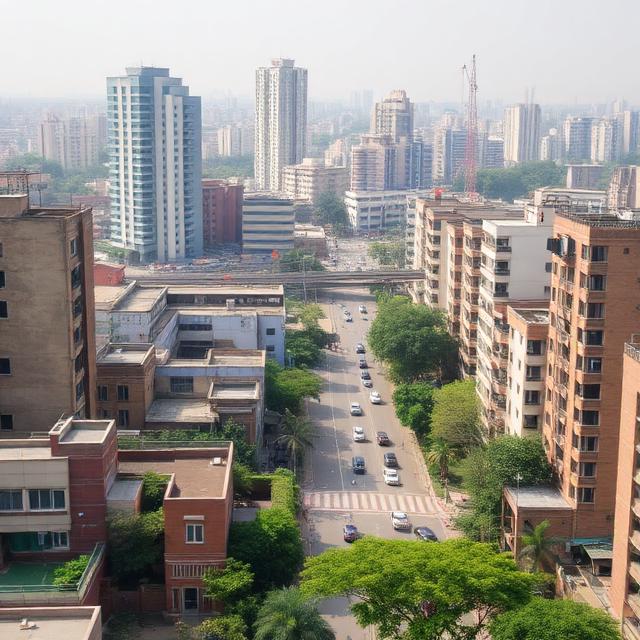
The Union Budget 2026 signaled a major pivot toward “State Capital Regions” and regional networks. The pressure on Tier-1 metros is easing because the “urban dream” is now closer to home.
-
The Cost-of-Living Dividend: In cities like Jaipur, Indore, or Kochi, a migrant worker or a tech professional can save 40% more of their income compared to Bengaluru or Delhi.
-
The “Hub-and-Spoke” Growth: Megacities are becoming “Hubs” for high-end services, while Tier-2 “Spokes” absorb the manufacturing and logistics workforce. This regional integration makes circular movement physically and financially viable.
3. The DPI Catalyst: Portability of Life
The biggest barrier to circular migration was the “loss of identity” and benefits. In 2026, Digital Public Infrastructure (DPI) has solved this.
-
Benefit Portability: Through One Nation One Ration Card (ONORC) and integrated health IDs, a worker from Bihar can access their PDS and insurance benefits in a factory in Gujarat seamlessly.
-
Financial Inclusion: UPI and digital-first banking mean that remittances are instant and “leakage-free.” A circular migrant is no longer just a “sender of money” but an active participant in their village economy while living 500km away.
4. Impact on the Rural Economy: “Local Urbanization”
Circular migration is transforming the Indian village into a “Peri-Urban” zone.
-
Remittance-Driven Modernization: Money flowing back isn’t just for consumption; it’s for investment. In 2026, we see a surge in “rural startups”—small-scale processing units or service centers funded by urban earnings.
-
Skill Transfusion: When a worker returns from a construction site in a smart city or a warehouse in a logistics hub, they bring back technical skills that modernize local agricultural and non-farm activities.
5. Challenges: The Policy “Blind Spot”
Despite its rise, circular migration remains a “ghost” in many traditional planning models.
-
Housing Precocity: Circular migrants often live in semi-permanent “rental housing” that lacks basic amenities. 2026 policy is still catching up with the need for “Rent-to-Own” or Migrant Hostels in Tier-2 cities.
-
Data Invisibility: Because these workers move frequently, they are often missed in municipal censuses, leading to under-funded public services in high-migration corridors.
Conclusion: From Concentration to Circulation
The “Urban Transition” of 2026 is a move away from the crowded, singular megacity toward a Networked India. Circular migration is the pulse of this new system—a flexible, resilient, and digitally-enabled movement that ensures growth isn’t just concentrated in a few pins on a map, but flows across the entire geography of Bharat.