
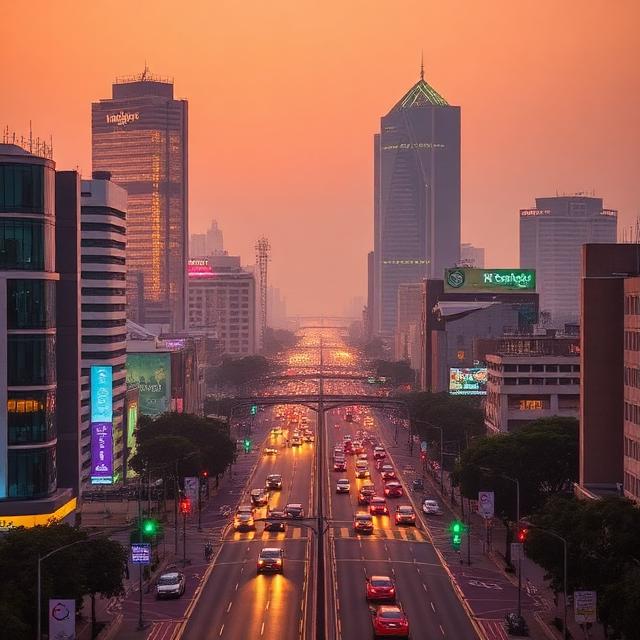
India stands at a paradoxical crossroads. In the same week that the Mumbai-Ahmedabad Bullet Train successfully completed a major elevated trial, heavy rains in Delhi and Bengaluru brought Tier-1 mobility to a grinding halt. The narrative of “Viksit Bharat @2047” is gaining speed, but the asphalt beneath it is cracking under the pressure of 400 million urban residents—a number expected to double by 2055.
The Union Budget 2026-27 recently delivered a wake-up call, cutting central urban development outlays by nearly 11.6% while simultaneously pivoting toward City Economic Regions (CERs). This shift signals a new era: the government is moving away from the “beautification” of Smart Cities and toward a gritty, regional economic strategy.
But can our cities truly keep up?
1. The Numbers: A Widening Gap
The scale of the crisis is best understood through the “Infrastructure-Demographic Mismatch.” India is urbanizing at a rate that far outpaces its ability to build.
-
The Investment Void: The World Bank estimates India needs ₹70 lakh crore ($840 billion) by 2036 to bridge its urban infrastructure deficit. Currently, we are spending only about 0.6% of GDP on urban assets—half of the required 1.2%.
-
The Mobility Crisis: Nationally, only 47,650 buses serve urban residents. To make matters worse, 61% of these are concentrated in just nine megacities, leaving the “Rest of India” dependent on private vehicles that choke already narrow roads.
-
The Congestion Tax: In 2026, congestion isn’t just a frustration; it’s a fiscal drain. In Delhi alone, the “cost of congestion” for an unskilled worker is estimated between ₹7,200 and ₹19,600 per year in lost wages and productivity.
2. The Bottlenecks: Why the Cracks are Showing
If the money is being allocated (₹12.2 lakh crore in total Capex for 2026-27), why does the urban experience still feel like a struggle?
A. The Governance Paradox
Indian cities are “embedded” within multi-layered governance. Unlike global hubs like Tokyo or London, Indian Mayors often lack the fiscal and administrative autonomy to make real-time decisions. Most Urban Local Bodies (ULBs) remain financially weak, with property tax mobilization sitting at a dismal 0.15% of GDP.
B. The “Metro-Only” Bias
One-third of India’s urban allocation is currently locked into Metro Rail projects. While prestigious, Metros are not the most inclusive solution for the urban majority. We have world-class trains underground, but the footpaths above them are often non-existent, making the “first and last mile” of a commute a dangerous hurdle.
C. Climate Vulnerability
2026 has already seen “recurrent urban flooding” become a standard post-monsoon headline. Our cities are built with outdated “box drain” designs that clog easily and lack the capacity for high-intensity, short-duration rainfall—the new normal in a warming world.
3. The 2026 Pivot: City Economic Regions (CERs)
The most significant shift in policy this year is the move from “Smart Cities” to City Economic Regions (CERs).
| Feature | Smart Cities (2015-2025) | City Economic Regions (2026+) |
| Focus | Technology-led beautification | Integrated regional logistics & industrial links |
| Coverage | Defined urban pockets (Area-Based) | Clusters of Tier-2, Tier-3, and Temple Towns |
| Funding | Central Grants | Challenge Mode (Reform-cum-results based) |
| Key Metric | Command & Control Centres | GDP per square km & Job creation |
The ₹5,000 crore fund per CER aims to energize growth beyond the traditional metropolitan hubs. By focusing on cities with populations over 5 lakh, the government is trying to preempt the “Slumification” of our next generation of growth centers.
4. The Path Forward: From Assets to Resilience
To keep up with growth, India’s urban strategy for the 2030s must evolve from “Asset Creation” to “System Efficiency.”
-
The “Sponge City” Adoption: Cities like Ahmedabad and Tiruchirappalli are already piloting “Nature-Based Solutions”—wetland restoration and permeable surfaces—to handle stormwater. This must become the national standard for every municipal body.
-
Decentralized Governance: Giving ULBs the power to issue Municipal Bonds (as seen in Hyderabad and Vadodara) is critical. Cities cannot run on “handouts” from the Center; they must be empowered to raise their own capital.
-
The “Bus First” Strategy: We need a massive infusion of electric bus fleets to complement the Metros. Mass transit is only as good as its weakest link, and for most Indians, that link is the humble bus.
Conclusion
India @ 2047 is an urban dream, but India @ 2026 is an urban struggle. The move toward City Economic Regions and the introduction of the Infrastructure Risk Guarantee Fund are strategic maturing of policy. However, the real test of our cities won’t be the speed of our bullet trains, but the reliability of our drains and the safety of our sidewalks.