
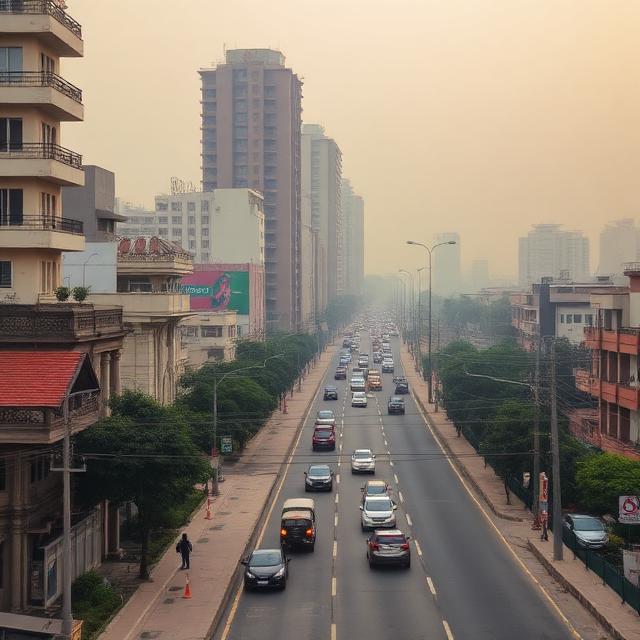
the blueprint for Viksit Bharat @2047 (Developed India) is no longer a distant vision; it is a high-stakes engineering project with a 21-year deadline. The government’s goal to move from a $3.9 trillion economy to a $30 trillion powerhouse by 2047 hinges on one question: Are we building for the next decade, or the next century?
The infrastructure choices made today are the “hardware” upon which the developed India of 2047 will run. Here is an analysis of their future-readiness.
1. The 2047 Scale: From Connectivity to Capacity
To reach “developed” status, India’s current asset-building is shifting from “coverage” (getting roads to every village) to “unprecedented scale.”
-
The Maritime Amrit Kaal: Under the Maritime Amrit Kaal Vision 2047, India is planning six mega ports with capacities exceeding 300–500 MTPA (Million Tonnes Per Per Annum). The goal is to increase total port capacity from 2,600 MTPA today to over 10,000 MTPA by 2047.
-
Aviation 2047: The roadmap envisions expanding the number of operational airports to 220 by 2030, with a long-term target of creating global transit hubs that rival Dubai or Singapore.
-
The Nuclear Pivot: In a major 2026 strategic shift, India has announced plans to increase nuclear power generation capacity tenfold by 2047, opening the sector to private players for the first time.
2. Future-Proofing: Resilience vs. Reality
The most critical challenge for 2047 isn’t just building more, but building better to withstand the climate disruption of the mid-21st century.
The “Climate-Resilient” Framework
By 2047, climate change is expected to be the ultimate “threat multiplier.” Current choices are being tested against three future-readiness criteria:
-
Decarbonized Logistics: The shift to 500 GW of non-fossil capacity by 2030 is the first step toward a net-zero grid by 2070. Projects like the Green Hydrogen Mission are designed to fuel the heavy industry of 2047.
-
Adaptive Built Environment: New urban guidelines (2025-26) now mandate “Sponge City” designs to handle the extreme rainfall patterns predicted for the 2040s.
-
The Infrastructure-Health Nexus: Planners are now linking infrastructure to health outcomes, recognizing that a developed nation requires a workforce that isn’t sidelined by the rising heatwaves or pollution levels projected for 2047.
3. The 2047 Strategic Scorecard
| Pillar | Status in 2026 | 2047 Readiness Rating | The “Future” Gap |
| Logistics | Costs at 7.9% of GDP | High | Transitioning the entire trucking fleet to Green Hydrogen/EV. |
| Digital (DPI) | Universal UPI/Aadhar | Very High | Future-proofing against Quantum Computing threats. |
| Energy | 40% Non-fossil | Medium | Mass-scale Energy Storage Systems (ESS) for 24/7 renewables. |
| Urban Life | Smart Cities Mission 1.0 done | Low to Medium | Managing the 40% of the population that will be urban by 2030. |
4. The “Missing Links” for a Developed India
If India is to avoid the “Middle Income Trap” before 2047, three specific gaps need urgent closure:
-
The Maintenance Mindset: India is excellent at building new assets but historically poor at maintaining them. A developed nation is defined by the reliability of its 20-year-old bridges, not just the beauty of its new ones.
-
The Skilled Workforce: By 2030, India faces a projected skill gap of 50 million people. Infrastructure like “University Townships” must move from physical buildings to high-quality output centers.
-
The “Data Ownership” Barrier: As AI becomes the central nervous system of 2047, India’s Digital Public Infrastructure must evolve to ensure data remains a public utility rather than a private monopoly.
Conclusion
Today’s infrastructure choices—the massive ports, the solar parks, and the digital stacks—are indeed “future-ready” in terms of ambition. However, the implementation “devil” remains. To be truly ready for 2047, India must pivot from Asset Creation (building the road) to Outcome Excellence (ensuring the road facilitates a $30 trillion exchange of value