
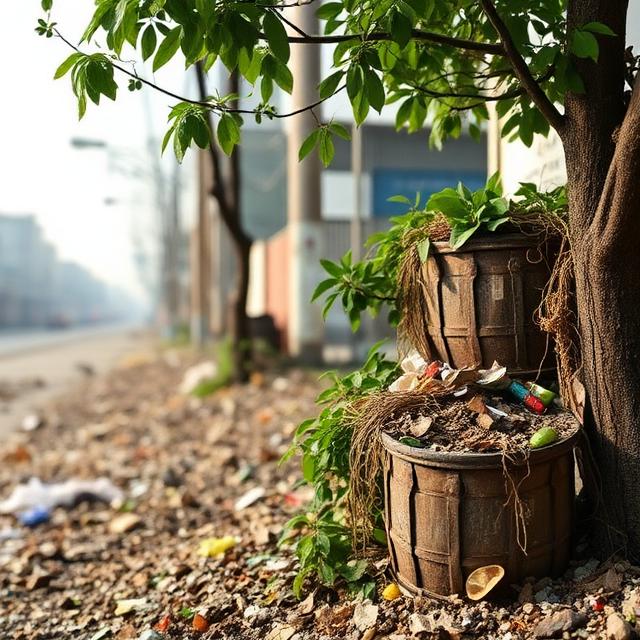
For decades, the “out of sight, out of mind” approach to waste led to the creation of towering landfills like Delhi’s Ghazipur or Mumbai’s Deonar. Today, a paradigm shift is occurring. Indian cities are transitioning from a linear “take-make-dispose” model to a Circular Economy, where waste is no longer a liability but a high-value resource for energy and construction.
The Rise of Waste-to-Energy (WtE)
With urban India generating over 62 million tonnes of municipal solid waste annually, Waste-to-Energy plants are becoming essential.
- The Process: Non-recyclable dry waste is incinerated at high temperatures to produce steam, which drives turbines to generate electricity.
- Success Story: The Bawana WtE Plant in Delhi processes 2,000 tonnes of waste daily, generating 24 MW of power, significantly reducing the burden on overflowing landfills.
Circular Construction: Upcycling Debris
Construction and Demolition (C&D) waste is one of the largest contributors to urban pollution.
- Green Bricks: Innovative plants in Ahmedabad and Chandigarh are now crushing old concrete and bricks to create “recycled aggregates” for new pavements and non-structural walls.
- Policy Support: The C&D Waste Management Rules mandate that large generators segregate waste, allowing cities to achieve a recovery rate of nearly 90% in pilot projects.
Bio-CNG: Powering Public Transit with Food Waste
Organic waste makes up nearly 50% of Indian municipal refuse. Instead of letting it rot and release methane, cities are “harvesting” it.
- Indore’s Gobar-Dhan Plant: Asia’s largest Bio-CNG plant in Indore processes 550 tonnes of wet waste daily to power 400 city buses. This reduces carbon emissions while providing the city with a cheaper fuel alternative.
Frequently Asked Questions (FAQs)
- What is a “Circular Economy” in cities? It is a system where resources are reused, recycled, or composted, ensuring zero waste to landfills.
- How does Waste-to-Energy work? It converts non-hazardous waste into electricity, heat, or fuel through various thermal and biological processes.
- Is WtE environmentally safe? Modern plants use advanced flue-gas cleaning systems to ensure emissions stay well within the limits set by the Central Pollution Control Board (CPCB).
- What is C&D waste? It stands for Construction and Demolition waste, including concrete, wood, metals, and glass from building sites.
- How can I segregate waste at home? Use the “Two-Bin” system: Green for wet (organic) waste and Blue for dry (recyclable) waste, as promoted by Swachh Bharat Mission.
- What is Bio-CNG? A purified form of biogas produced from the anaerobic digestion of organic waste; it is chemically similar to natural gas.
- Why is Indore the cleanest city in India? Largely due to its 100% waste segregation at source and its ability to process almost all waste into energy or compost.
- What are “Recycled Aggregates”? Materials produced by crushing C&D waste that can replace natural sand and stone in construction.
- Can waste be used for roads? Yes, India has pioneered the use of processed plastic waste in bituminous road construction to increase durability and reduce plastic pollution.
- What is the “Gobar-Dhan” scheme? An initiative to convert cattle dung and solid waste into compost and biogas, benefiting both rural and urban sanitation.