
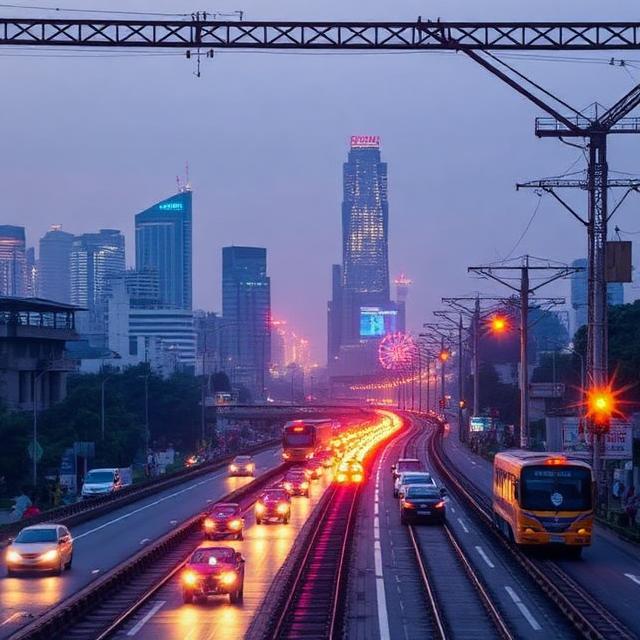
The construction of India’s cities is no longer just about brick and mortar—it is a race to build the “operating system” for a $5 trillion economy. With the Union Budget 2026-27 setting the pace, the focus has shifted from expanding city limits to deepening city efficiency.
As of February 2026, the narrative of Indian urbanism is being rewritten by three major forces: the rise of City Economic Regions (CERs), the adoption of Intelligent Infrastructure, and a move toward Circular Construction.
1. The Strategy: City Economic Regions (CERs)
The 2026 budget marks the end of the “Smart City” pilot phase and the beginning of the Regional Growth Hub era.
-
The Challenge Mode: The government has allocated ₹5,000 crore per CER over five years. This isn’t a simple grant; cities must compete in a “challenge mode” to prove they can implement reforms in property tax, digital governance, and land-use efficiency.
-
Beyond Metros: The focus is now on Tier-2 and Tier-3 cities and even temple towns, which are being developed as integrated economic ecosystems to take the pressure off over-saturated hubs like Bengaluru and Mumbai.
-
High-Speed Connectors: Seven new High-Speed Rail corridors (e.g., Mumbai-Pune, Delhi-Varanasi) are being developed as “growth connectors,” effectively turning distant satellite towns into commutable suburbs.
2. The Tech: From Digital India to “Intelligent India”
By early 2026, construction in India has become significantly more data-driven.
-
Digital Twins: Major projects, including new airports and metro phases, now use Digital Twins—virtual 3D clones that simulate everything from traffic flow to flood risks before a single pillar is cast.
-
Modular & 3D Construction: To meet the massive housing demand, 3D-printed structural components and Pre-Engineered Buildings (PEB) have become the gold standard, reducing project timelines by 30-50%.
-
Cognitive Infrastructure: Using AI and IoT, cities are evolving into “cognitive” systems where Integrated Command and Control Centres (ICCCs) can predict infrastructure failures and optimize energy grids in real-time.
3. The Shift: Sustainable and Resilient Building
The 2026 construction boom is defined by “climate-readiness.” Following the severe urban flooding of 2024-25, the industry has pivoted toward Resilient Urban Planning.
-
Self-Healing Concrete: To reduce long-term maintenance costs and improve durability in extreme weather, self-healing materials are being piloted in major highway and bridge projects.
-
Recycling Assets: A new structural measure involves recycling public sector land through dedicated REITs (Real Estate Investment Trusts), unlocking dormant capital to fund greenfield infrastructure.
-
Multi-Modal Logistics: The budget positions logistics as a strategic pillar, with new freight corridors and the operationalization of 20 new National Waterways to reduce the carbon footprint of moving goods.
4. The Financial Frontier: De-Risking the Future
Building India’s future cities requires an estimated $840 billion by 2036. To bridge this gap, 2026 sees the launch of the Infrastructure Risk Guarantee Fund.
-
Private Sector Confidence: This fund provides partial credit guarantees to lenders, lowering the cost of borrowing for private developers in high-risk infrastructure phases.
-
Municipal Bonds: To empower local bodies, the government now offers a ₹100 crore incentive for any single municipal bond issuance exceeding ₹1,000 crore, pushing cities to become fiscally self-reliant.
Conclusion
The infrastructure being built today is the foundation of Viksit Bharat @ 2047. By 2026, the blueprint has moved from “isolated smart pockets” to “integrated economic regions.” The challenge is no longer just how much we build, but how intelligently we connect it.