
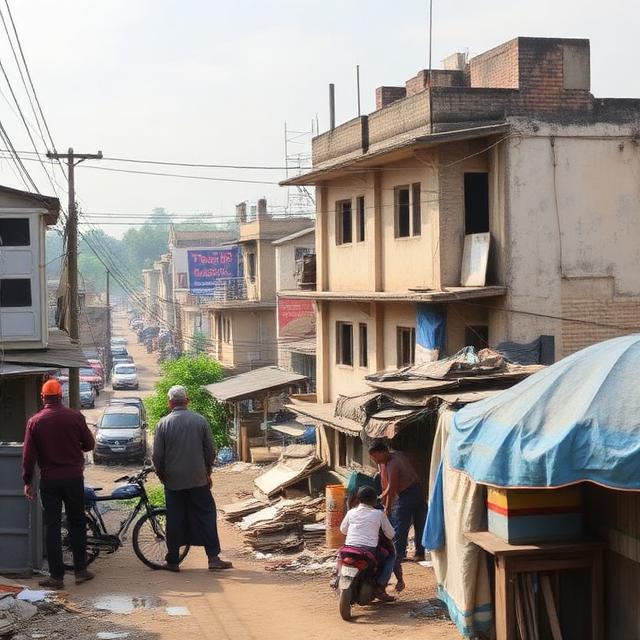
In 2024, record-breaking heatwaves and devastating monsoon floods transformed Indian cities into high-stakes laboratories for climate adaptation. From Delhi’s 50°C+ summer peaks to Bengaluru’s underwater arterial roads, the message is clear: traditional “grey” infrastructure of concrete and pipes is no longer enough. The next frontier of urban development is Climate-Proofing—a shift toward resilient, nature-based systems that can withstand the unpredictable.
The Vulnerability Gap: Why India is at the Frontline
India’s urban areas contribute to 60% of its GDP, a figure expected to reach 75% by 2030, according to the The Energy and Resources Institute (TERI). However, nearly 70% of the infrastructure India will need by 2050 is yet to be built. This presents a unique “leapfrog” opportunity to embed resilience into the very blueprint of our future cities.
Key Pillars of Climate-Resilient Urbanism
1. The “Sponge City” Revolution
To combat urban flooding, cities like Chennai and Kochi are adopting the Sponge City model. This involves replacing solid concrete with porous materials that allow rainwater to soak into the ground. Chennai has recently inaugurated model Sponge City Parks to recharge groundwater. By absorbing rainwater instead of letting it run off into drains, these cities create a buffer for dry seasons, as noted by Lukmaan IAS.
2. Heat Action Plans (HAPs) and Passive Cooling
The Urban Heat Island (UHI) effect can make Indian cities 3–5°C hotter than surrounding rural areas. Ahmedabad’s Heat Action Plan was the first of its kind in South Asia, incorporating early warnings and “cool roofs.” Hyderabad has also pioneered cool roof policies, where painting rooftops with solar-reflective white paint can reduce indoor temperatures by 3–7°C.
3. Restoring Blue-Green Assets
Indian cities have historically neglected their wetlands, but restoration is now a priority. Coimbatore’s Periyakulam Lake uses a floating solar plant to generate clean energy while reducing water evaporation. Meanwhile, cities like Bhopal and Hyderabad are using the Japanese Miyawaki method to create dense micro-forests on small urban plots to act as natural air conditioners, as highlighted by IMPRI.
Innovative Financing: The Green Bond Wave
Building resilience requires massive capital. Indian municipalities are increasingly turning to the market. Vadodara issued India’s first certified green municipal bond to fund water reuse and liquid waste management projects. Under the AMRUT Scheme, cities can receive financial incentives of up to ₹13 crore for every ₹100 crore of green bonds issued, according to the Council on Energy, Environment and Water (CEEW).
Frequently Asked Questions (FAQs)
- What does “climate-proofing” a city mean? It involves designing urban systems to withstand extreme weather events like floods and heatwaves, as detailed by TERI.
- How do sponge cities help with water scarcity? They recharge depleted aquifers by absorbing rainwater instead of letting it waste away, a strategy discussed by Well Labs.
- What is a “cool roof”? A roof designed to reflect more sunlight; it’s an innovative mitigation strategy for urban heat.
- Why are Indian cities more vulnerable to heat? High density of concrete traps heat, while lack of green cover prevents cooling, per AQI India.
- What is the 15-minute city concept? A model where daily needs are within a short walk, reducing heat-emitting traffic, as explored by Drishti IAS.
- How does AI help? IoT sensors allow for real-time monitoring of water levels, providing early warnings for floods.
- What are Miyawaki forests? High-density urban forests that grow 10x faster, ideal for space-crunched cities, as noted by IMPRI.
- Who is most at risk? Vulnerable groups in informal settlements bear the brunt of extreme weather, as cited by TERI.
- Can citizens participate? Yes, through participatory budgeting, residents can help decide where green infrastructure is placed.
- What is a Green Municipal Bond? A debt instrument used by cities to fund environmental projects.