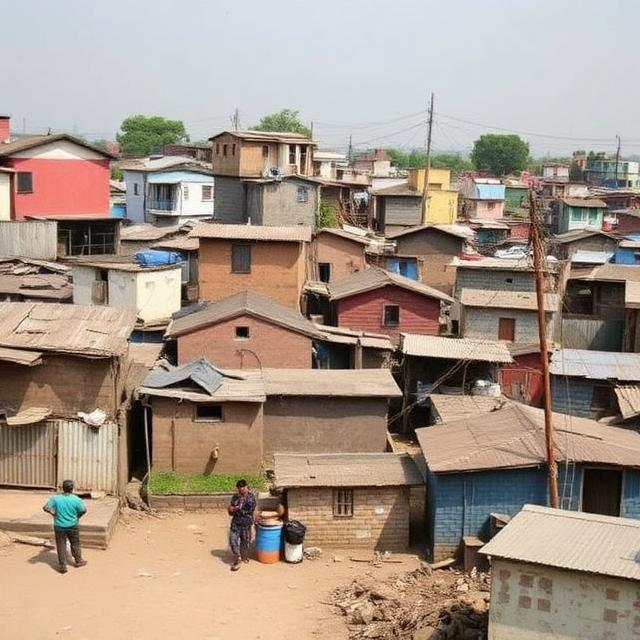
the global urban narrative has shifted from “Smart Cities” to “Inclusive Systems.” In India, the Union Budget 2026-27 presents a complex landscape for our most vulnerable residents. While the national goal remains a $32 trillion economy by 2047, the path through our informal settlements is being rewritten.
We are moving past the era of seeing slums as “problems to be cleared” and toward seeing them as “ecosystems to be integrated.” This is the evolution from Informal to Inclusive.
1. The 2026 Fiscal Reality: A Pivot to the Periphery
The current fiscal year has brought a startling change. Total central outlay for urban development saw a nominal 11.6% cut (falling to ₹85,522 crore).
-
The Strategy: The government is shifting the focus from Tier-1 metros to City Economic Regions (CERs)—clusters of Tier-2 and Tier-3 cities.
-
The Funding Gap: With central grants for schemes like PMAY-U and Swachh Bharat Mission-Urban facing reductions, the mandate for 2026 is Municipal Self-Reliance. Cities are being pushed to unlock their own land value and issue municipal bonds to fund local inclusion.
2. PMAY-U 2.0: The New Blueprint for Housing
Launched in late 2024 and hitting full stride in 2026, PMAY-Urban 2.0 is the government’s primary vehicle for addressing the housing gap for 1 crore families. It introduces four critical pillars designed for the urban poor:
| Vertical | Impact for the Urban Poor (2026) |
| Beneficiary-Led Construction (BLC) | Provides ₹2.5 lakh to EWS families to build on their own land; states now mandate land rights for those without them. |
| Affordable Rental Housing (ARH) | Targets the “Floating Population”—migrants and industrial workers who don’t want to buy, but need dignified, short-term stays. |
| Interest Subsidy Scheme (ISS) | A 4% subsidy on loans up to ₹8 lakh, making formal credit accessible to those previously reliant on moneylenders. |
| Technology Innovation Grant | Incentivizes the use of sustainable, low-carbon materials like bamboo-composites and fly-ash bricks to lower construction costs. |
3. The “Last-Mile” Infrastructure Gap
While India’s Metro network has crossed the 1,000 km mark in 2026, the urban poor still face a “Mobility Tax.” For a resident in an informal settlement, a Metro ticket can cost 20% of their daily wage.
The 2026 Solution: Shift from “Mega-Rail” to “Micro-Mobility.”
-
Bus-First Cities: Planners are finally redirecting focus toward city bus systems and non-motorized transport (walking and cycling).
-
Trunk Infrastructure: PMAY-U 2.0 now mandates that states provide “Trunk Infrastructure”—water, sewage, and electricity—up to the project site, ensuring new affordable housing doesn’t become an isolated “concrete island.”
4. Climate Resilience: The Poor are the Frontline
In 2026, climate change is the ultimate “poverty multiplier.” Informal settlements, often located on floodplains or with tin roofs, bear the brunt of extreme weather.
-
Sponge City Interventions: In cities like Ahmedabad and Chennai, 2026 projects are integrating “Nature-Based Solutions.” By creating urban wetlands and permeable pavements within low-income neighborhoods, cities are reducing flood risks and the “Urban Heat Island” effect.
-
Thermal Comfort: New affordable housing designs now incorporate “Cool Roof” technologies and passive ventilation, recognizing that a house is only “adequate” if it is liveable during a 48°C heatwave.
5. Governance: Inclusion Through Participation
The “Missing Link” remains the 74th Constitutional Amendment. While we have the technology (Digital Twins and AI), we often lack the democratic “soft” infrastructure.
-
Ward Committees: 2026 is seeing a push to revive Ward Committees to ensure that the urban poor have a seat at the table during city planning.
-
Digital Agency: Programs like FutureSkills Prime are moving beyond basic access, training slum youth in digital document drafting and cyber-hygiene, turning “users” into “producers” in the digital economy.
Conclusion: The Path to 2047
True inclusion isn’t just about building houses; it’s about building livelihoods, dignity, and resilience. As we navigate the fiscal contractions of 2026, the success of “Viksit Bharat” depends on whether our cities can bridge the gap between the skyscraper and the settlement.
The road from informal to inclusive is long, but in 2026, the map is finally becoming clear: we must plan with the poor, not just for them.