
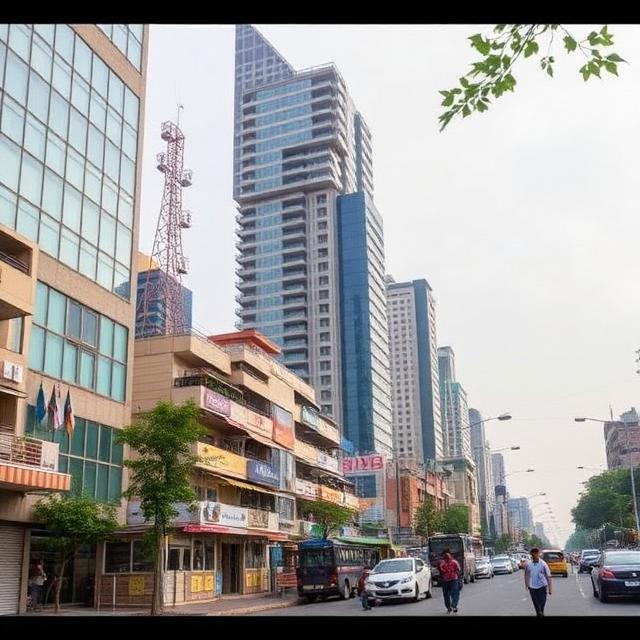
By 2050, nearly 900 million Indians—roughly 56% of the population—will live in cities. To put that in perspective, India is preparing to build the equivalent of a new “Chicago” every year for the next two decades.
As of early 2026, the blueprint for this “Urban Awakening” has shifted from the experimental “Smart Cities” phase to a gritty, high-stakes infrastructure race. With the Union Budget 2026-27 setting the stage, here is how India is planning for its 500 million new urban citizens.
1. The Strategy: City Economic Regions (CERs)
In 2026, the government has moved away from isolated city planning toward the City Economic Region (CER) model.
-
The Goal: Instead of just fixing a city center, CERs integrate a central metro with its surrounding Tier-2 and Tier-3 “growth nodes.”
-
The Scale: Seven CERs have been prioritized (including hubs like Bengaluru, Surat, and Varanasi) with a ₹5,000 crore allocation each.
-
The “Challenge Mode”: Funding is no longer a guaranteed grant; it is reform-linked. Cities must prove they can improve property tax collection and digital governance to unlock these funds.
2. Housing: From “Shelter” to “Assets”
To accommodate the next 500 million, India needs an estimated 144 million new homes by 2070.
-
PMAY-Urban 2.0: Following the success of the first phase, the new 2026 mandate focuses on Rental Housing Complexes for migrants and interest subvention for the middle class.
-
Modern Construction: To meet the speed required, the budget has incentivized 3D-printed housing and pre-cast technologies, aiming to reduce construction time by 40%.
3. The Mobility Matrix: High-Speed and e-Buses
Urban transport in 2026 is being split into two tracks: mega-projects for regional speed and electric fleets for local reach.
-
High-Speed Rail (HSR): Seven new HSR corridors (e.g., Mumbai-Pune, Delhi-Varanasi) have been identified to turn distant cities into “commutable” suburbs.
-
The e-Bus Surge: The PM-eBus Sewa has been expanded in 2026 to include an additional 4,000 electric buses, specifically targeting Tier-2 towns and the North-East to reduce the carbon footprint of the urban commute.
4. Resilience: The $2.4 Trillion Climate Gap
The World Bank recently warned that India requires $2.4 trillion by 2050 to make its cities climate-resilient.
-
Sponge City Mandate: After the 2024-25 flood cycles, 2026 planning guidelines now mandate “Sponge City” features—permeable pavements and rejuvenated urban wetlands—in all new CER developments.
-
Heat Mitigation: With extreme heatwaves becoming the new normal, “Cool Roof” initiatives and urban forest (Miyawaki) targets are now mandatory for municipal performance ratings.
5. The “Digital Twin” Revolution
Planning for 500 million people can’t be done on paper. In 2026, Indian planners are increasingly using Digital Twins—virtual 3D replicas of cities.
-
Predictive Planning: These models allow officials to simulate how a new 50-story building will affect wind flow, traffic, and sewage pressure before a single brick is laid.
-
Utilities Automation: Technologies like SCADA (for water) and AI-driven grid management are being rolled out across 50 cities to ensure that “developed” infrastructure doesn’t crumble under the weight of “developing” demand.
Conclusion: The Final Frontier
The “Developed India” (Viksit Bharat) of 2047 will be won or lost in its streets. While the 11.6% cut in direct urban outlays in the 2026 Budget suggests a tighter belt, the focus on Private Sector Participation and Municipal Bonds shows a shift toward financial maturity.
The cities are no longer just places people live—they are the operating systems of the Indian economy.