
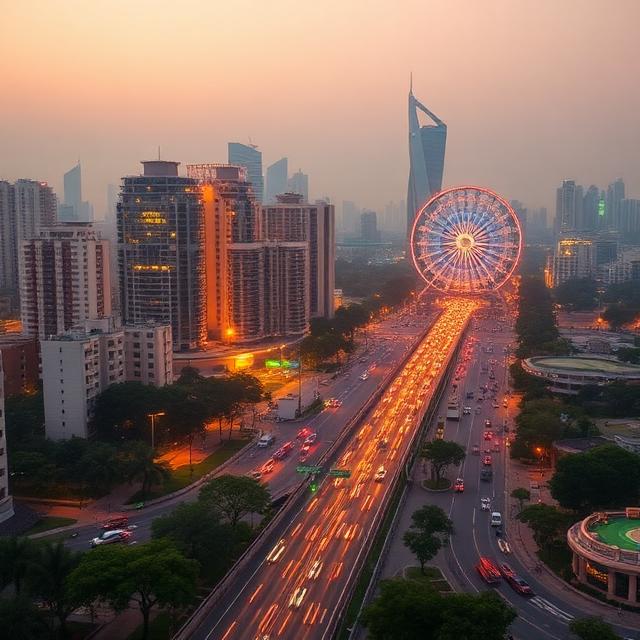
In the narrative of India’s rapid modernization, the Smart Cities Mission (SCM) stands as one of the most polarizing yet transformative urban experiments in the country’s history. Launched in 2015, the mission was designed to turn 100 cities into “beacons” of efficiency, sustainability, and technological prowess.
As we stand in early 2026, the original SCM has reached its official sunset, transitioning into a new era of urban governance. With ₹1.64 lakh crore invested and over 95% of projects completed, it is time to look under the hood of India’s smart cities to see what truly changed—and where the “smart” vision fell short.
1. What Worked: The “Brain” of the City
The most undeniable success of the mission is the creation of a digital central nervous system for Indian cities.
The Rise of ICCCs
Every one of the 100 Smart Cities now has an operational Integrated Command and Control Centre (ICCC). Initially viewed as “fancy war rooms,” these became life-saving infrastructure during the pandemic and now manage daily urban life.
-
Real-time Management: ICCCs now monitor everything from traffic congestion to waste collection routes.
-
Public Safety: Over 84,000 CCTV cameras and thousands of emergency call boxes have been integrated, significantly reducing police response times in cities like Surat and Ahmedabad.
Digital Public Infrastructure (DPI)
The mission successfully leapfrogged traditional bureaucracy by introducing SCADA (Supervisory Control and Data Acquisition) systems for water and electricity.
-
Leakage Control: In cities like Pune and Indore, smart meters have helped reduce “non-revenue water” (leakage and theft) by up to 20%.
-
Smart Waste: RFID-enabled garbage trucks and GPS-tracked collection have turned solid waste management into a data-driven utility rather than a manual chore.
Competitive Federalism
The “Challenge Mode” selection process changed the DNA of urban governance. Cities were no longer just recipients of grants; they were competitors. This led to the birth of Special Purpose Vehicles (SPVs)—corporate-style entities that allowed cities to bypass some of the red tape that usually stalls municipal projects.
2. What Didn’t: The “Gaps” in the Blueprint
Despite the high completion rates, the mission faced significant structural and social hurdles.
The “Island of Excellence” Problem
The mission primarily used an Area-Based Development (ABD) approach. This meant that while 500 acres of a city became “world-class” with sensors and cycle tracks, the remaining 95% of the city often saw zero change.
-
Social Exclusion: Critics point out that these “smart patches” often coincided with affluent neighborhoods, leaving informal settlements and slums disconnected from the “smart” benefits.
The Maintenance Deficit
Building a smart classroom is easy; maintaining a digital kiosk for five years is hard.
-
Tech Obsolescence: Many early-stage IoT sensors and smart poles installed in 2017–18 are already defunct or outdated in 2026 because the original contracts didn’t include long-term “life-cycle” management.
-
Skill Gap: Urban Local Bodies (ULBs) often lacked the in-house data scientists and engineers needed to operate the high-tech systems built by private contractors.
Climate Resilience vs. Aesthetic Infrastructure
While cities built beautiful riverfronts and parks, they often neglected the “boring” but vital infrastructure like deep-drainage systems. As seen in the urban floods of the 2020s, even “smart” cities were paralyzed by a few hours of rain because the sensors couldn’t fix the clogged, century-old pipes beneath them.
3. What’s Next: Urbanization 2.0 (2026–2030)
As announced in the Union Budget 2026-27, India is moving from “Isolated Smart Projects” to “City-Wide System Performance.”
City Economic Regions (CERs)
The new focus is on creating seven City Economic Regions, including Bengaluru, Surat, and Varanasi. The goal is to view the city not just as a place to live, but as a $50 billion+ economic asset.
The “Sponge City” Initiative
Learning from past failures, “Smart City 2.0” mandates Nature-Based Solutions. New projects now prioritize permeable pavements, urban forests, and rejuvenated lake systems (like Coimbatore’s 7-lake restoration) to manage the climate extremes of the 2040s.
University Townships and Industrial Corridors
A standout move for 2026 is the creation of five university townships near major industrial corridors. This ensures that the “Smart People” the mission originally called for are being trained right next to the “Smart Jobs” of the future.
4. The 2026 Reality Check: A Comparison
| Feature | Smart Cities Mission (2015-2025) | Urbanization 2.0 (2026-2030) |
| Primary Goal | Asset Creation (CCTVs, Smart Roads) | System Performance & Livability |
| Strategy | Area-Based (The “Smart Patch”) | Pan-City & Economic Regions |
| Tech Focus | IoT and Monitoring | AI, Digital Twins, and Data Privacy |
| Climate Strategy | Aesthetic Greenery | Resilience (Sponge Cities, Flood Planning) |
Conclusion: Beyond the Dashboard
The Smart Cities Mission was a necessary “shock to the system” for Indian urban planning. It proved that cities could handle complex technology and competitive financing. However, the lesson of 2026 is that a city is only as smart as its most vulnerable citizen is included.
The next phase isn’t about adding more sensors; it’s about using the data from those sensors to ensure that every resident has clean water, safe streets, and a job within a 20-minute commute. The “Smart City” is no longer a destination—it’s the operating system for a developed India.